edizione numero
284
rivista on-line mensile
anno venticinquesimo - LUGLIO 2026
registrata presso il Tribunale di Milano
n.330 del 22/05/2007
anno venticinquesimo - LUGLIO 2026
registrata presso il Tribunale di Milano
n.330 del 22/05/2007
NATURA
febbraio 2026
PERSONAGGI PER L’AMBIENTE: NORMAN MYERS (ENGLISH VERSION)
? 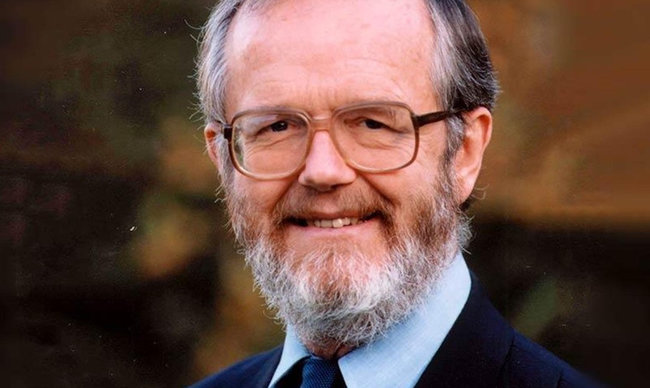
He was born in Whitewell, Yorkshire, on August 24, 1934, and was a specialist in biodiversity studies, known for his work on climate refugees.
He grew up on his family's farm without electricity, gas, or indoor plumbing until he was eight years old. He moved with his family to Kenya, then to Headington, near Oxford. He was a district officer during the last years of British rule in Kenya, then a teacher in Nairobi. He spoke Swahili, Masai, French, and German. He studied in California at Berkeley, became a consultant to the UN, the World Bank, and other organizations, and remained in Kenya until the 1980s. He was an honorary professor at Green College, Oxford, and an adjunct professor at Duke University in Vermont. He lectured at many universities in the US.
He produced 18 books and 250 scientific articles. In the 1970s, he denounced the rapid and accelerated decline of tropical forests, data later confirmed by satellite photos.
These include Madagascar, the Amazon rainforest, the Colombian Chocó, the Atlantic coast of Brazil, the Eastern Himalayas, Peninsular Malaysia, Northern Borneo, the Philippines, and New Caledonia.
In 1988, he published an article in which he identified a process he brilliantly called the “hamburger connection,” showing the links between industrial food production, which always requires new land, even through deforestation, and climate crises.
He argued for the importance of assessing, studying, and working in areas he called “biodiversity hotspots,” those with a huge number of plant and animal species, especially forests. He considered them the core on which to focus efforts to stop the mass extinction of different species. Many organizations raised and used funds for this purpose.
He was among the first to link climate change and modern migration, even making estimates that proved to be exaggerated, but the concept has now become common sense. In fact, there is a need to legally reevaluate the status of immigrants, who are accepted if there are political reasons and rejected in other cases.
Recently, the first international agreement on climate refugees was reached.
See the link below:
Rifugiati climatici: l’accordo Australia–Tuvalu fa storia
He died on October 20, 2019, after battling Parkinson's disease and dementia.
He was born in Whitewell, Yorkshire, on August 24, 1934, and was a specialist in biodiversity studies, known for his work on climate refugees.
He grew up on his family's farm without electricity, gas, or indoor plumbing until he was eight years old. He moved with his family to Kenya, then to Headington, near Oxford. He was a district officer during the last years of British rule in Kenya, then a teacher in Nairobi. He spoke Swahili, Masai, French, and German. He studied in California at Berkeley, became a consultant to the UN, the World Bank, and other organizations, and remained in Kenya until the 1980s. He was an honorary professor at Green College, Oxford, and an adjunct professor at Duke University in Vermont. He lectured at many universities in the US.
He produced 18 books and 250 scientific articles. In the 1970s, he denounced the rapid and accelerated decline of tropical forests, data later confirmed by satellite photos.
These include Madagascar, the Amazon rainforest, the Colombian Chocó, the Atlantic coast of Brazil, the Eastern Himalayas, Peninsular Malaysia, Northern Borneo, the Philippines, and New Caledonia.
In 1988, he published an article in which he identified a process he brilliantly called the “hamburger connection,” showing the links between industrial food production, which always requires new land, even through deforestation, and climate crises.
He argued for the importance of assessing, studying, and working in areas he called “biodiversity hotspots,” those with a huge number of plant and animal species, especially forests. He considered them the core on which to focus efforts to stop the mass extinction of different species. Many organizations raised and used funds for this purpose.
He was among the first to link climate change and modern migration, even making estimates that proved to be exaggerated, but the concept has now become common sense. In fact, there is a need to legally reevaluate the status of immigrants, who are accepted if there are political reasons and rejected in other cases.
Recently, the first international agreement on climate refugees was reached.
See the link below:
Rifugiati climatici: l’accordo Australia–Tuvalu fa storia
He died on October 20, 2019, after battling Parkinson's disease and dementia.
Folco de Polzer